When it comes to flour packaging, choosing the right material directly affects food safety, storage life, transportation cost and brand image—this is a key concern for flour millers, food distributors, and bulk packaging buyers. Three most popular packaging types for flour in the B2B market are PP woven bag, kraft paper laminated bag and PE food grade bag, each with unique advantages and application scenarios. Below is a detailed comparison to help you make the most suitable choice, including key considerations for bulk purchase and storage.
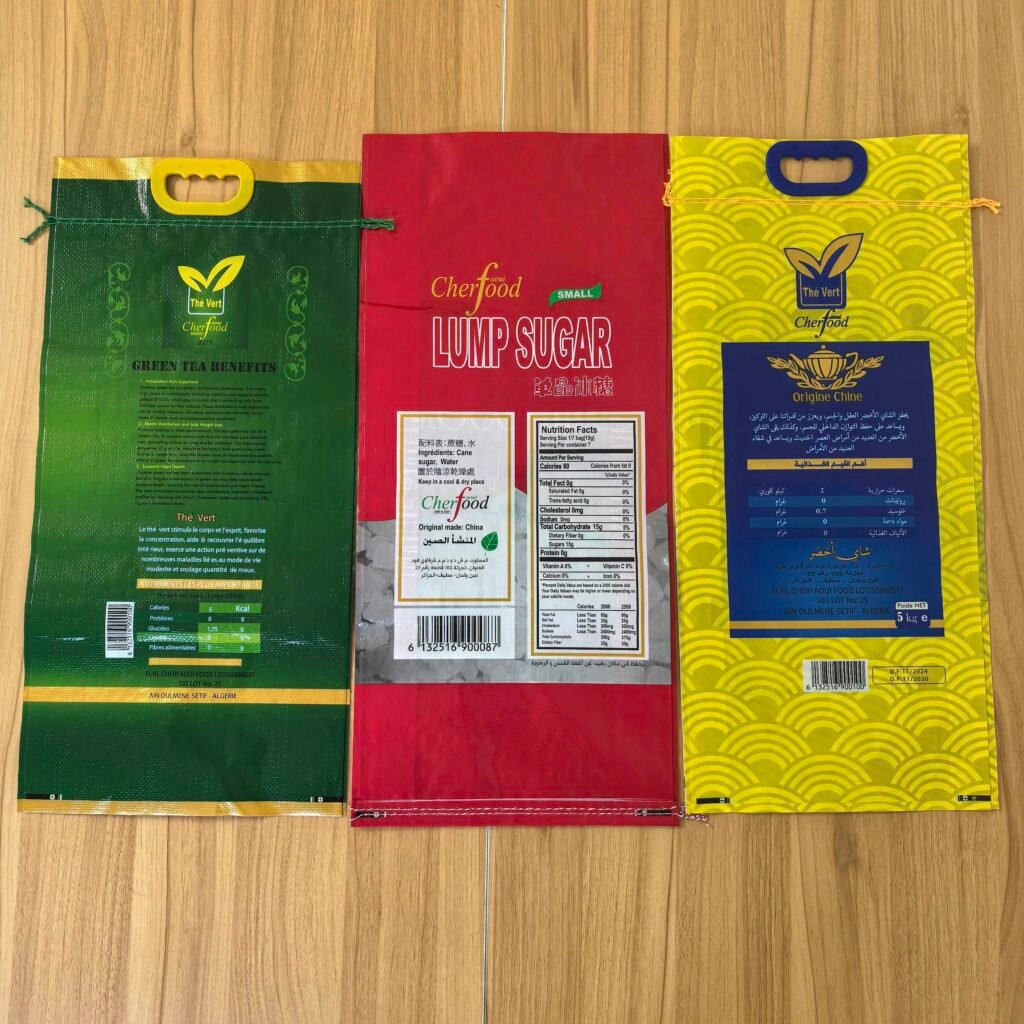
PP Woven Flour Bag
Advantages
– High tensile strength and tear resistance: This makes it extremely durable and not easy to break during long-distance transportation, which is crucial for bulk flour delivery. It can withstand heavy stacking without deformation, reducing the risk of bag breakage and flour waste.
– Cost-effective: As one of the most economical flour packaging materials, it is perfect for 25kg, 50kg bulk industrial flour packaging, helping flour mills and distributors save procurement costs.
– Good air permeability: The special structure of PP woven material allows air circulation, avoiding moisture accumulation inside the bag and preventing flour from getting damp or moldy during long-term storage.
– Light weight: Compared with other materials, PP woven bags are lighter, which can save shipping and loading costs, especially for large-batch export orders.
Disadvantages
– Simple printing effect: The surface of PP woven flour bags is relatively rough, so the printing effect is not as delicate as kraft paper or PE bags, which is not suitable for high-end retail supermarket sales that require beautiful appearance.
– Poor waterproof performance without inner film: If there is no inner PE film, PP woven bags are not waterproof, so they need additional waterproof treatment when used in humid environments or long-distance sea transportation.
Best use: Bulk wholesale flour, factory bulk shipment, agricultural grain distribution, and large-batch export flour packaging. It is the first choice for cost-sensitive buyers who focus on transportation durability.
Kraft Paper Laminated Flour Bag
Advantages
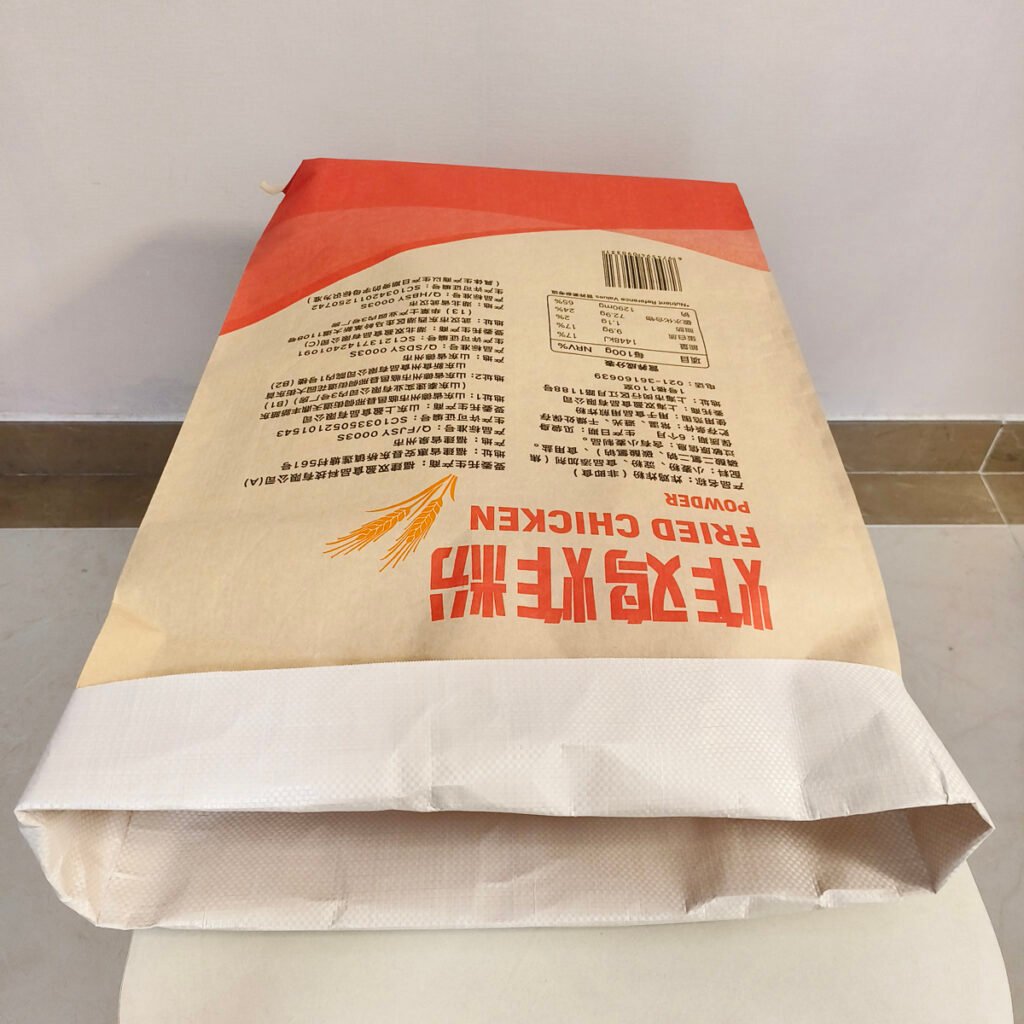
– Premium appearance: The natural eco-friendly paper texture of kraft paper gives it a high-end and environmentally friendly image, which is very suitable for displaying brand value and attracting retail consumers.
– Good comprehensive protection: After lamination treatment, it has excellent moisture-proof, dust-proof and shading performance, which can effectively protect flour from external environmental impact and extend the shelf life.
– Customizable colorful printing: The surface of kraft paper composite bags is smooth, which can support high-quality colorful printing, making it ideal for supermarket retail and branded flour packaging.
– Food safety compliance: It is made of food-grade kraft paper and composite materials, which meets international food safety standards and is suitable for packaging organic flour and high-end nutritional flour.
Disadvantages – Higher price: Compared with PP woven flour bags, the cost of kraft paper composite bags is higher, which will increase the packaging cost of flour products. – Lower stretch strength: The toughness of kraft paper is not as good as PP woven material, so it needs careful stacking and transportation to avoid bag breakage caused by excessive pressure.
Best use: 5kg, 10kg retail flour, branded premium flour, organic flour packaging, and supermarket shelf sales. It is suitable for buyers who pursue brand image and product grade.
PE Food Grade Flour Bag
Advantages
– High food safety: Made of food-grade PE material, it is non-toxic, odorless, and does not react with flour, ensuring the safety and hygiene of flour products.
– Excellent sealing and waterproof performance: It can be completely sealed, effectively preventing moisture, dust and insects from entering, which is very suitable for long-term storage of flour.
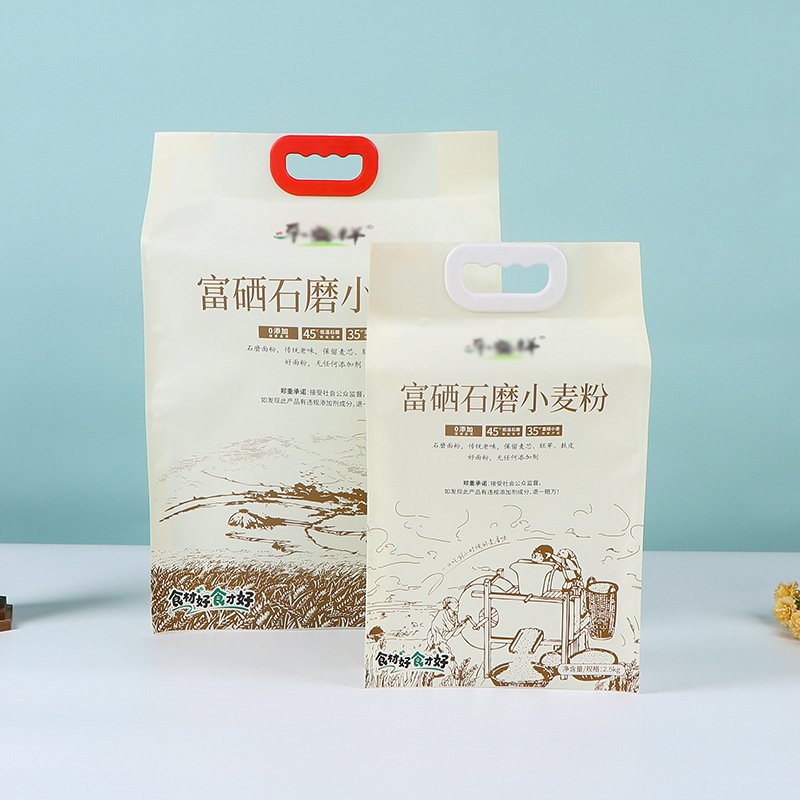
– Soft texture: The PE material is soft and easy to handle, which is suitable for small-package household flour, and can be designed with easy-to-tear notches for user convenience.
– Bright full-color printing: The surface of PE bags is smooth, which can achieve bright and vivid full-color printing, helping brands stand out in retail channels.
Disadvantages
– Poor air permeability: The sealed structure leads to poor air circulation. If the flour is not fully dried, it is easy to accumulate moisture inside the bag, so ventilation holes need to be designed for long-term storage.
– Not suitable for heavy packaging: PE bags have limited load-bearing capacity and are not suitable for super heavy 50kg bulk flour packaging, which is more suitable for small and medium-sized packaging.
Best use: 1kg, 2kg, 5kg household small packaging, supermarket retail and e-commerce flour delivery. It is the preferred choice for household and retail-oriented flour brands.
Summary
For bulk industrial flour, large-batch export and cost-sensitive buyers: Choose PP woven flour bag. – For high-end retail, branded flour and organic flour that focuses on appearance and grade: Choose Kraft paper laminated flour bag. – For small household packaging, sealed storage and retail sales: Choose PE food grade flour bag.
If you need those flour bags, feel free to contact us.