I. Packaging Bag Physical Performance Test Functional Test Parameter
(1)Thickness
Thickness is one of the most basic physical parameters of packaging bag. Packaging bag for different purposes have different thickness requirements. Thickness uniformity is also important. Uneven thickness may cause local rupture or deformation of the packaging bag during use. A thickness gauge is usually used for measurement, and tests should be conducted at multiple positions to ensure data accuracy.
(2) Tensile Strength
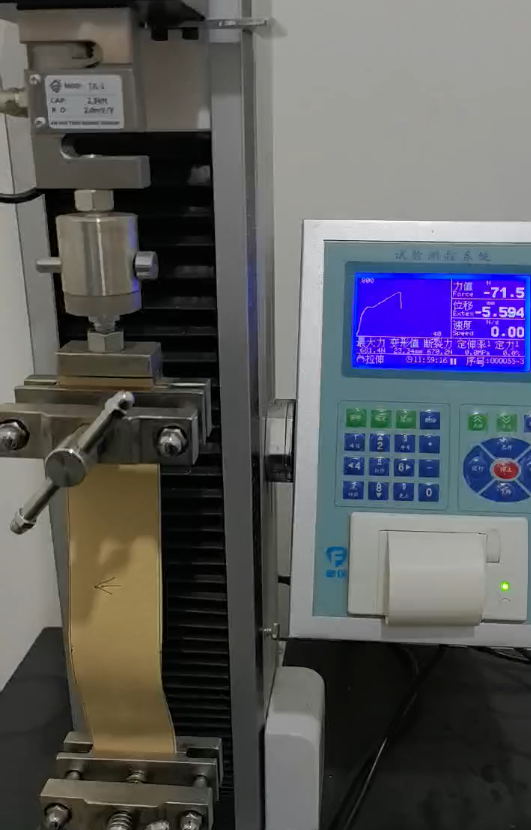
Tensile strength refers to the maximum stress a packaging bag can withstand when subjected to tensile force. This parameter is crucial for maintaining the integrity of packaging bags during transportation and handling. Insufficient tensile strength may lead to stretching, deformation, or even rupture under external force, resulting in damage to the packaged items. Tensile strength testing is typically performed using a tensile testing machine. The packaging bag sample is fixed in the machine’s fixtures, and tensile force is applied until the sample breaks. The maximum tensile force at break is recorded to calculate tensile strength. Tensile strength varies significantly among different materials—plastic films generally have higher tensile strength, while paper bags have relatively lower tensile strength.
(3) Tear Strength
Tear strength is the ability of a packaging bag to resist tearing when subjected to tearing force. This parameter is essential for preventing accidental tearing during use. For instance, if tear strength is insufficient, consumers may tear the bag excessively when opening it, affecting packaging integrity. Tear strength can be tested using an pendulum tear testing machine. The sample is fixed, tearing force is applied, and force changes during tearing are recorded to calculate tear strength. Plastic films usually have higher tear strength than paper bags, but paper bag tear strength can be improved by increasing thickness or using special processing techniques.
(4) Puncture Resistance
Puncture resistance refers to a packaging bag ability to resist penetration by sharp objects. It is particularly important for packaging sharp items or products that may come into contact with sharp objects during transportation. Insufficient puncture resistance can lead to sharp objects piercing the bag, causing contamination or damage to the contents. Puncture resistance testing is done with a puncture testing machine. The sample is fixed, and a puncture needle of specific shape and size applies pressure. Force changes during puncture are recorded to calculate puncture resistance. Plastic films generally have better puncture resistance than paper bags.
(5) Heat Seal Strength
Heat seal strength is the bonding strength of the heat-sealed part of a packaging bag. For bags made using heat sealing technology, it directly affects sealing performance and integrity. Insufficient heat seal strength may cause the sealed part to crack during transportation or use, leading to leakage or contamination of the contents. Heat seal strength testing uses a heat seal strength testing machine. The sealed part is fixed in fixtures, and tensile force is applied until cracking occurs. The maximum force at cracking is recorded to calculate heat seal strength. Heat seal strength is closely related to temperature, time, and pressure, which need to be optimized through experiments for ideal results.
(6) Impact Resistance
Impact resistance is the ability of a packaging bag to resist damage when subjected to impact force. During transportation and handling, bags may experience impacts such as dropping or collision. Impact resistance testing is performed with a dart impact testing machine. The sample is fixed, and a dart of a certain mass is dropped from a specific height to impact the bag. The dart mass or height at which the sample breaks is recorded to calculate impact resistance. Plastic films generally have better impact resistance than paper bags, which can be improved by increasing thickness or using special processing techniques.
II. Packaging Bag Chemical Performance Test Parameters
(1) Residual Solvent Content
Residual solvent content refers to the amount of organic solvents left in the packaging bag after production. Organic solvents are used in some production processes, such as printing inks and laminating adhesives. Excessive residual solvents may contaminate food, pharmaceuticals, or other packaging bags, and even harm human health. Testing is usually done with a gas chromatograph. The sample is placed in the instrument, and heating and separation processes are used to detect the type and content of residual organic solvents. For food packaging bags, residual solvent content must be strictly controlled within national standard limits to ensure food safety.
(2) Heavy Metal Content
Heavy metal content refers to the concentration of metals such as lead, cadmium, mercury, and arsenic in the packaging bag. Heavy metals are harmful to human health. Excessive levels may migrate into the packaged products through contact, posing health risks. Testing is typically conducted using atomic absorption spectrometers or inductively coupled plasma mass spectrometers. The sample is processed and analyzed to detect heavy metal concentrations. For food and pharmaceutical packaging bags, heavy metal content must comply with strict national standards.
(3) Chemical Stability
Chemical stability is the ability of a packaging bag to resist chemical reactions when in contact with the packaged contents. Different contents may have varying chemical properties, such as acidity, alkalinity, or oxidizability. Insufficient chemical stability may cause reactions between the bag and the contents, leading to bag damage or content deterioration. Testing involves simulating actual packaging conditions by exposing the sample to solutions of different chemical properties for a certain period. Changes in appearance and performance (e.g., discoloration, deformation, dissolution) are observed to assess chemical stability. For special-purpose bags (e.g., for chemical reagents), appropriate materials must be selected based on the contents’ chemical properties, with rigorous stability testing.
III. Functional Test Parameters
(1) Sealing Performance
Sealing performance is the ability of a packaging bag to prevent external substances from entering and internal substances from leaking. Good sealing is crucial for protecting contents from environmental influences. Insufficient sealing may cause moisture absorption, deterioration, or leakage. Testing is done with a sealing tester. The sample is placed in the instrument, and a certain pressure or vacuum is applied to check for leaks. Special-purpose bags (e.g., vacuum-sealed, gas-filled bags) require stricter sealing tests.
(2) Moisture Resistance
Moisture resistance is the ability of a packaging bag to prevent water vapor from entering. It is vital for moisture-sensitive products such as food, pharmaceuticals, and electronic components. Insufficient moisture resistance may lead to moisture absorption, deterioration, or failure of the contents. Testing is performed using a water vapor transmission rate tester to measure water vapor permeability. Aluminum foil composite films have better moisture resistance than ordinary plastic films, which can be enhanced by increasing layers or using special processing techniques.
(3) Temperature Resistance
Temperature resistance is the ability of a packaging bag to maintain stable performance under different temperature conditions. Bags may encounter high temperatures, low temperatures, or temperature fluctuations during use. Insufficient temperature resistance may cause deformation, rupture, or performance degradation. Testing involves exposing the sample to different temperature environments and observing changes in appearance and performance (e.g., deformation, rupture, discoloration). Temperature resistance varies by material—polyethylene films have low temperature resistance and are generally used at room temperature, while polyester films have higher resistance and can be used over a wider temperature range.
(4) Printing Quality
Printing quality refers to the clarity, color accuracy, and registration precision of printed patterns on the packaging bag surface. Good printing quality enhances aesthetics and serves brand promotion and product description purposes. Testing involves visual inspection of pattern clarity, color accuracy, and registration, as well as using printing quality testing instruments to measure density, dot gain, and other parameters. High-quality brand packaging requires strict printing quality inspections.
IV. Summary
Packaging bag test parameters cover multiple aspects including physical performance, chemical performance, safety performance, and functionality. These parameters are crucial for ensuring quality and performance—only through rigorous testing can bags meet the needs of different products and protect their safety and quality. In actual production, manufacturers should select appropriate test parameters and methods based on bag usage and requirements to conduct comprehensive quality inspections, improving product quality and market competitiveness. With technological advancements and industry development, test parameters and methods are constantly updated and improved. Manufacturers need to stay updated on industry trends, learn and apply new testing technologies to adapt to market changes and demands.
Our packaging bags in plastic pp woven bags, paper bags meet above your requirements for different usage. If you need more, contact us for more.